
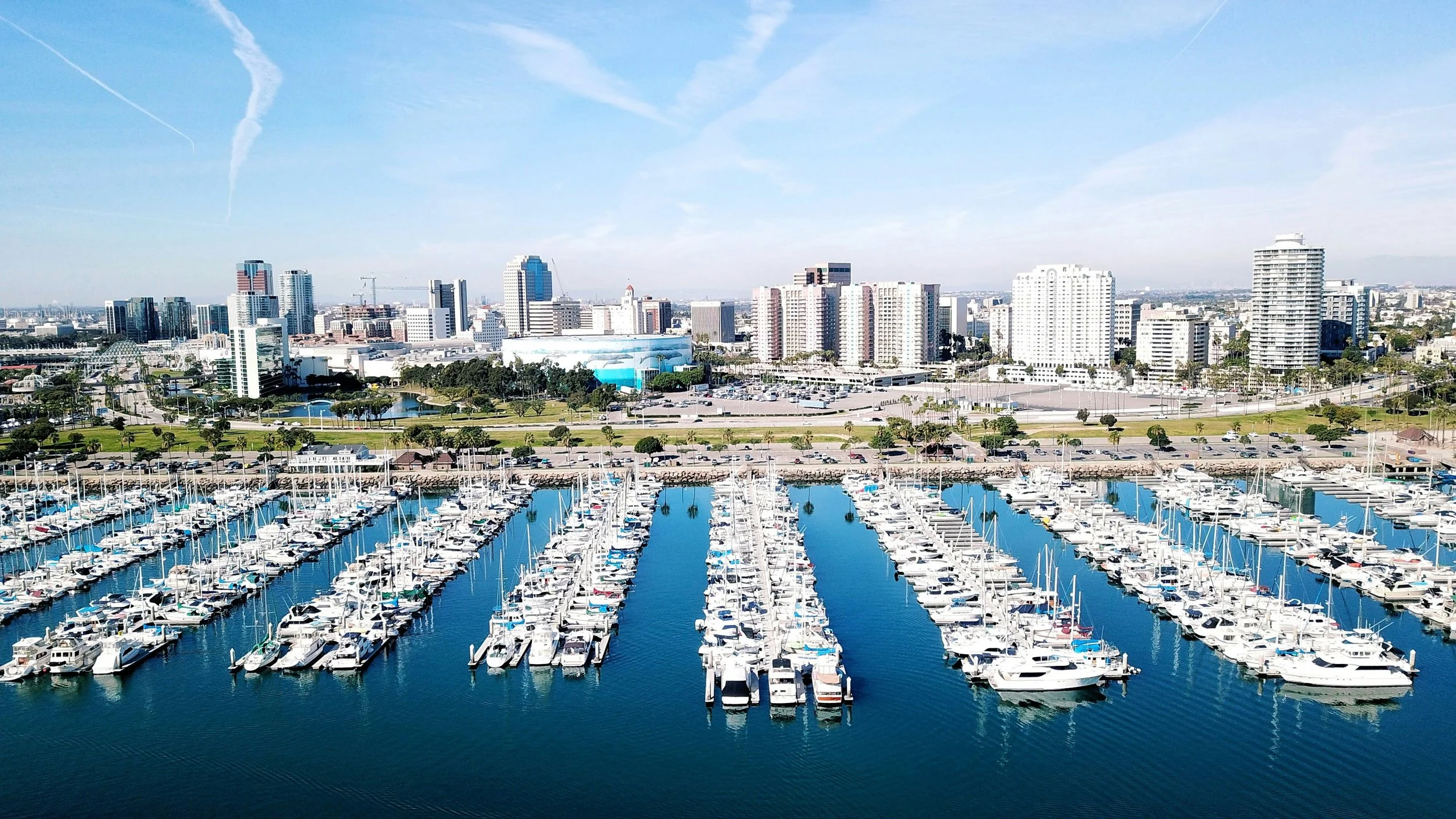
Downtown and Shoreline Marina, Long Beach, CA
Task Manager / Team Lead / Diving Supervisor / Engineer-Diver
Client: Port of Los Angeles
Project: Berths 198–200A Structural Condition Assessment and Repair Design
Location: San Pedro, California
Duration: 2013–2018
Project Background
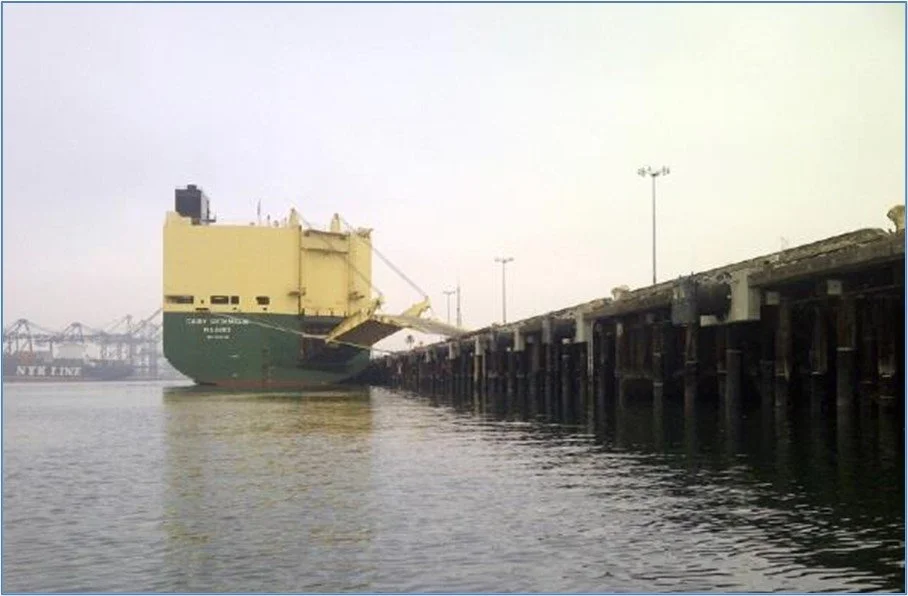
Berths 198, 199, and 200A are legacy waterfront structures located at the Port of Los Angeles, originally constructed between 1950 and 1959. The wharves total approximately 1,475 linear feet and are supported by roughly 2,675 piles. The structures consist of a complex mix of timber and concrete construction, reflecting multiple generations of repairs and modifications.
In 1960, a major fire significantly damaged the timber superstructure components of Berths 199 and 200A, with the exception of the timber piles. Subsequent reconstruction efforts replaced much of the superstructure with concrete elements supported by the original timber piles. As a result, the wharves comprise a unique combination of materials, construction types, and load paths requiring detailed inspection and evaluation.
Structural Assessment
While employed by AECOM, Anthony T. Mets, P.E. served as Task Manager, Team Lead, Diving Supervisor, and Engineer-Diver for the structural condition assessment of approximately 1,700 linear feet of timber and concrete wharf structures.
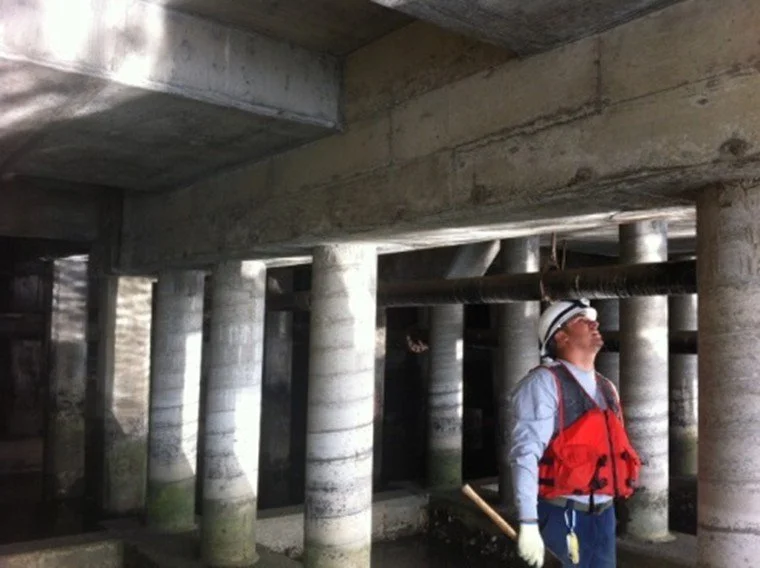
The assessment included comprehensive above-water and underwater inspections of timber piles, cast-in-place concrete piles, pile caps, deck systems, beams, bulkhead walls, bracing, fender systems, mooring bollards, utility piping, and other accessible structural components.
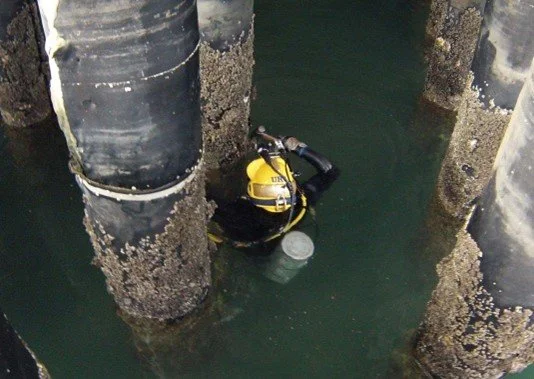
Above-water inspections consisted of Level I (100% visual/tactile) and Level II (10–15% hands-on) inspections of exposed structural elements to document the extent and severity of existing deficiencies. Underwater inspections included Level I inspections of 100% of piles and Level II inspections of approximately 10–15% of piles at each berth. Level II underwater inspections involved removal of marine growth within 12- to 24-inch-wide bands at the mudline, splash zone, and selected mid-water locations.
Photographic and video documentation, including continuous underwater video of piles and bulkhead walls, was obtained to support the assessment.
Repair Evaluation and Design
Inspection findings were incorporated into a detailed structural condition assessment report that included estimated wharf load capacities, identification of observed defects by component type, general repair recommendations, and rough-order-of-magnitude cost estimates for rehabilitation.
Although not part of the original scope of work, the assessment also identified structural components and materials that could potentially contain asbestos-containing materials (ACM), lead-based paint (LBP), or other hazardous materials, to support future planning and regulatory compliance.
Based on the condition assessment, repair design and construction documents (PS&E) were prepared. Mr. Mets also provided construction support services, including attendance at site meetings, responses to contractor RFIs, and assistance to the Port in evaluating day-to-day construction and in-water repair decisions.
This project was performed by Anthony T. Mets, P.E. while employed by another engineering firm. It is included here to illustrate relevant professional experience and does not represent work performed by Thalassa Technology and Engineering.